The Beatitudes – Cause for Examination

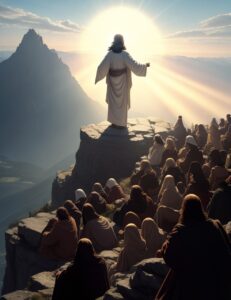
AI-generated image for Sermon on the Mount

AI-generated image for Sermon on the MountHopefully, as we have examined the Beatitudes from Matthew 5:1-12, the conversation has made clear that the passage is not discussing a future expectation or a set of causal characteristics to which we should some day aspire. While the first four statements are indeed attitudes, they are neither casual nor optional for those who would lead a faithful life. These verses describe what it means to have a heart that is obedient to God. Furthermore, the following three verses (Matthew 5:7-9) describe the actions of someone fully committed to being a child of God.

Ideally, the “blessed” statements are leading us to an intense and truthful self-examination. Sometimes we tend to identify specifically with one of the beatitudes without realizing that, together, they describe our character and our actions. We need to start thinking of Matthew 5:1-12 as a summary of what it means to be a Christian. The passage is both progressive (a pattern for growth) and conclusive – if we actually pattern our lives after these verses, we find the complete guidance needed for life. This guidance is not found exclusively in the passage; instead, the verses provide instructions that enable us to understand our situation, know what to do about it, see where to turn, and then learn how to live. It makes clear the value of God’s word and also warns of the challenges faced by those who do live faithfully in this lost and dying world.

Following the statements of Matthew 5:1-12, Jesus continues for another chapter and a half in what we commonly call the Sermon on the Mount. In the chapters of Matthew 5-7 is recorded the greatest sermon of all time, with each successive lesson elaborating on the pattern that is to be our lives. However, all of the lessons of Matthew 5:13-7:27 are summarized in the Beatitudes. As we examine ourselves against that pattern, we can then move on to the detailed instructions given in the balance of the sermon. Jesus speaks on: 1) our influence to the world; 2) Christ as fulfillment of the Law; 3) sin is not just physical, it begins as a spiritual issue; 4) the sanctity of marriage; 5) the value of integrity; 6) how to pray; 7) that which is truly valuable, and; so much more.

As we continue studying these “blessed” statements, are we carefully coloring in our lives with Jesus’s words as the lines to stay within? As children with a coloring book, we often stray outside those lines. The question we must answer is: do we go back to the pictures we have already colored and purpose in our hearts to stay closer to the inside lines next time?

The Beatitudes – Blessed Are Those Who Mourn​

AI-generated image for Sermon on the Mount

How often do we read a passage from Scripture and think that it sounds so opposite from what we would expect? Such seems to be the case with Matthew 5:4 Blessed are those who mourn, For they shall be comforted. How could it be that being in mourning could be a blessed thing?

Most often, the immediate answer lies with an understanding that we are not God. The greatest our knowledge and wisdom can reach pales in comparison to that of God Almighty. In 1 Corinthians 3:19, we read, For the wisdom of this world is foolishness with God. We repeatedly see in the Bible that man’s arrogance leads to misunderstanding, because we think we know when, in fact, our understanding is still so limited. When God’s Word tells us something that doesn’t seem right, there are two possibilities – we haven’t studied enough to comprehend the Scripture fully, or we neglect to acknowledge (or remember) that God knows so much more than we do. Hopefully, we tend toward the former rather than the latter; I worry about being arrogant when it comes to faith and spirituality.

When Scripture tells us that those who mourn are blessed, if it seems strange, we need to study to reconcile our thinking to God’s truth. In our Matthew 5 passage, the word translated as “mourn” is the strongest Greek word for mourning. The word is associated with the most overwhelming sadness, often over matters of loss or personal condition. I believe it is the latter use that Jesus intended when he spoke the Beatitudes.

In verse 3, we examined how “poor in spirit” was a reference to our spiritual condition without God and Christ – destitute and without hope. We have also talked about how reading through the Beatitudes (Matthew 5:1-12) is a sort of progression of the Christian life (beginning, growth, maturing and trials). With these realizations, it is natural to see Jesus move from discussing the poor in spirit (those who see their absolute need for God) to those who are mournful over the sinful condition of their lives. Many faithful Christians can describe the moment when they realized their need for Christ’s salvation (poor in spirit) and, with equal force, discuss the gut-wrenching sorrow (mourning) over the sinful life they have led.

When 2 Corinthians 7:10 tells us we cannot truly repent without godly sorrow, it is natural to see the progress from understanding our state to mourning over our condition. As He lists the other Beatitudes, Jesus tells how this process is good. He teaches us that, although painful, the mourning is good and necessary, and it is not the end of the cycle. As we often say, read to see the entire context, not just the single verse. But even this single verse is a powerful teaching: those who mourn over their condition in a way that leads them to Christ will be spiritually blessed.


The Beatitudes – Introduction

AI-generated image for Sermon on the Mount

AI-generated image for Sermon on the MountWhile I understand the motivation behind the statement, it is shortsighted to view the Beatitudes merely as attitudes. It seems equally problematic when someone considers the text of Matthew 5:1-12 as a discussion of separate people. We can also find people who view the text as a reference to something yet to come. But the fact of the matter is that Jesus is describing something much more in the beginning of the Sermon on the Mount.

When Jesus lists those who are blessed, He is actually listing the characteristics (the defining traits) that separate children of God from the rest of the world. Jesus is describing what is required of us if we are truly going to submit to the will of God. We can also see this as a progression of sorts with the verses forming 1) the beginning of faith, 2) the growth of faith, 3) the maturing of faith and finally 4) the trials of faith. When we read and study what has become known as the Beatitudes, we are seeing the purest explanation of what it takes to be an obedient Christian. Christ’s words go further and pronounce the specific, albeit spiritual, rewards of an obedient life.

The Beatitudes outline several traits on which we should base our lives, and then tell us of the rewards: heaven, comfort, fulfillment, mercy, and an eternal relationship with God. The listing of these traits and rewards also shows that, with God, rewards are spiritual. That doesn’t mean that physical life holds no pleasure for the faithful, but it should instill in us an understanding that our heavenly home is the ultimate promise. To live in glorious perfection, without pain or sadness, in the presence of the Almighty, is a goal worth whatever costs we encounter.

Ironically, while those who heard Jesus teach immediately recognized that He taught “…as one having authority…” (Matthew 7:29), that is not the world’s reaction today. In the Beatitudes, Jesus explained the law we now focus on. Through the study of this great sermon and other New Testament scriptures, we find divine guidance for a life pleasing to God. And yet, man tries either to ignore God’s word or to add to it. As we consider the text, let us each put aside our opinions, rely solely on the Bible for guidance and work to integrate these attitudes not as occasional feelings, but as pervasive, all-controlling traits of our faithful lives.

Modern or Outdated?

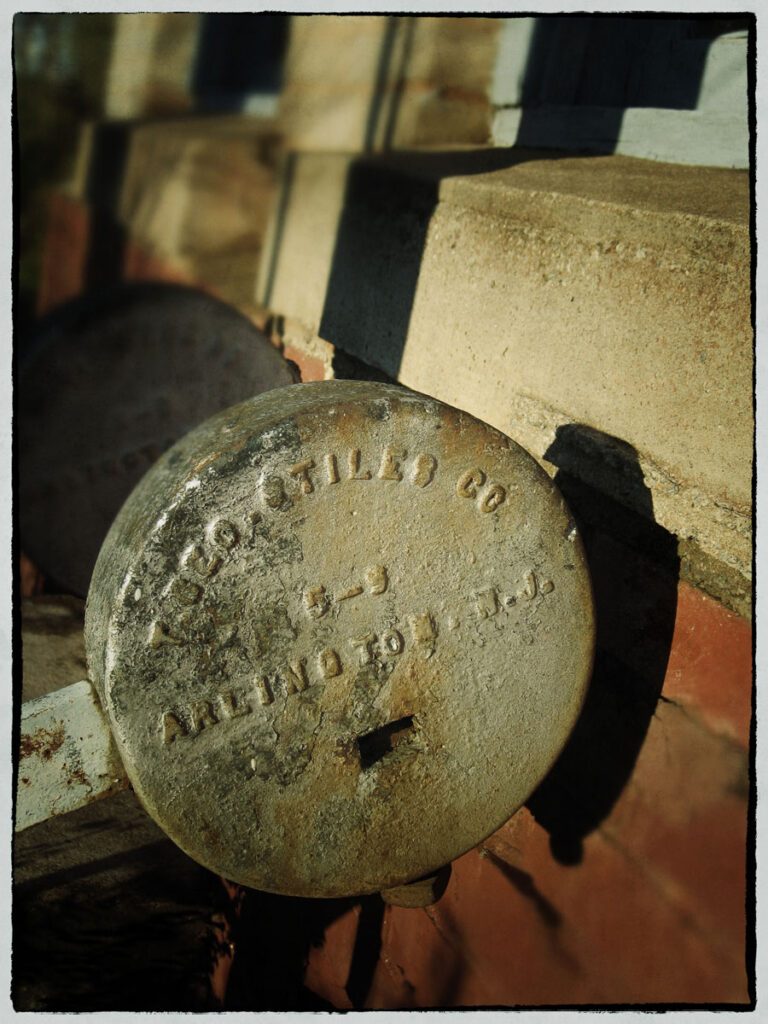
Image of Train Signal Hardware - Print by Martin Kent Miller

Image of Train Signal Hardware - Print by Martin Kent MillerIn Acts 24, when Paul stood accused before Felix, the Jews brought a Roman orator, Tertullus, to make their case against the apostle. In verses 5-6, the Bible records a portion of Tertullus’ speech, “For we have found this man a plague, a creator of dissension among all the Jews throughout the world, and a ringleader of the sect of the Nazarenes. He even tried to profane the temple, and we seized him and wanted to judge him according to our law.

If we consider this example and many of the other points of conflict between Christ and the Jewish leadership of His day, we come to realize that, in part, the Jews accused Jesus and the early Christians of modernism. They saw them as challenges to the traditions they had created for themselves and, rather than working to understand the Gospel’s core message, they clung tightly to those traditions. While the Jews of the first century followed a faith based on the Old Testament, their practices were a far departure from what God had given initially to Moses at Mt. Sinai. Through the ages, they had built for themselves a system they liked, a model that gave certain people extraordinary influence, enriching those in positions of power.

Ironically, today, much of the world is convinced of just the opposite. Many people in the world around us view faith as outdated, resistance to change or even anti-progress. They view us as either superstitious or backward because we trust the Bible more than modern philosophy and so-called science. The accusations could not be further from the truth, because many of the ideas that are embraced as modern are actually false. The Bible and science are fully compatible when viewed with an honest perspective. Unfortunately, scientific “discovery” is often influenced by whoever is paying for the discovery. If modern ideals are examined, they fall generally into two categories: those that offer some degree of success because they are either based on Scripture or at least do not violate God’s Word, or those that ultimately fail because they are against God’s will.

As a person of faith, it can be hard to understand how so many (often educated) people can miss this point. They embrace modernism (not the kind of which Tertullus accused Paul), scoff at us, and are then amazed when the world’s condition continues to decline. So what are we to do? First, learn the Word of God. We can’t give a defense if we don’t understand the text on which we base our faith. Two, when prepared, invite skeptics to examine the Word. It has withstood the test of centuries of disbelief. Three, be ready in season and out (2 Timothy 4:2) to discuss matters of faith and your commitment to following Christ.

Isn’t it interesting to see how Satan reads the room to determine just how to deceive mankind?

Dear Mr. President

White House - Washington, DC

Dear Mr. President,

We awake this morning to discover the accomplishment of an important goal over which many of us have been praying — fervently. I have spoken with many who have watched with jubilation and thankfulness as even the most liberal media outlets in the world acknowledge your victory in the 2024 US Presidential Election. We had feared (and to a degree still do) the possibility of violence in our widely divided nation, and we pray now for your safety and the safety of your family. We also continue to pray for the future—of our country and its leadership, our culture and way of life, our families and their families and our freedoms. Many of us know what has been sacrificed to make these blessings possible, and we expect a collective respect for history. We don’t long for veneration of the shameful occurrences in our past but rather strive for the constructive growth of the nation.

And so now our focus turns to the work set before you and, in recognition of the design of this great nation, us. While the words spoken on the campaign trail are often abandoned as the urgent need for votes wanes, we pray for results based on the objectives you have outlined. In diverse ways, you have spoken to the hopes of literally millions of Americans. These Americans are indeed from diverse backgrounds. You could not have achieved this historic milestone without understanding our worries and addressing our aspirations. And so, from your words, we draw the object of our expectations and prayers.

From the victory given to you, we expect a renewed integrity. Our nation is dramatically divided, and you are in a unique position to address that danger. First, in the tradition of Hippocrates, do no harm. Guard your words so that they are directed toward actions, not inflaming the opponent. You are (or soon will be once again) the President of the United States of America; please act accordingly. Mankind instinctually craves strong leadership, and this yearning presents you with a tremendous opportunity wrapped in a formidable obligation. Robust and effective leadership has never occurred in the form of a dictator or political scoundrel. For our nation to return toward an irreproachable position, our leader must strive to be above reproach. Let your words be seasoned with salt and informed by both knowledge and wisdom. Your opponents are already redoubling their efforts to deceive their audiences and persuade with curses and grotesque hyperbole. Please, don’t roll around in the mud with them.

Secondly, say what you mean and mean what you say. In this age of technology and instant content, speak and work to the fullness of time, not the immediacy of the quip. This country needs to see what it looks like when a man does what he says he will do. It is clear to many Americans that our political system, while the best in the world, carries the nagging weight of human flaws. We are optimistic that, as you have intimated, you plan to address the most serious of those deficits. But we are also hopeful for a man who is meticulous with his words.

History suggests that all great civilizations become so enthralled with their virtue that they slide into decay. Unfortunately, it appears that our nation is not immune from this affliction. It comes in many forms, but for us as Americans, it may be most evident in the menacing polarization of our collective psyche. What do I mean? Maybe it is best exemplified by the examples around us.

Today, Americans pay exorbitant sums to celebrities, those who call themselves journalists (on both ends of the political spectrum) and “influencers.” These sums appear to serve as a bounty through which we can abdicate our personal responsibility to decency. It is not your task to correct these exploits by force or rule, but rather, it is your duty to affect change through example. From the victory given to you, we need a revitalized sense of respect.

We can easily assemble a list of morally reprehensible behaviors espoused by vocal factions within our society. We know these behaviors to be wrong, yet we understand the need to educate and inform gracefully in hopes of securing a more perfect union. In short, while we know right from wrong, out of respect for those souls in the wrong, we strive openly, peacefully, but purposefully for change. We pray that you will be undaunted in your pursuit of a better nation while standing resolutely as our example of respect and integrity.

We also watch for the actions promised from the victory given to you. Those Americans who have provided you with this success have done so with the aspiration of coming achievements. While not all of your support comes from those devoid of ulterior motives, your election would not have been secured without those of us with honest intentions. We are watching anxiously to see that you will work toward making America greater still.

We pray that you will restore law and order to the national agenda. Our hope is that, while America remains a land of opportunity, you will secure the nation and strengthen a responsible system of immigration. Please show this country how to honor those who have sacrificed for its security and prosperity, our veterans. And while we also pray for the preservation of our freedoms, we await your leadership to influence the country away from its lusts — especially its lusts for the murder of the innocent and the destruction of the nuclear family that has long been the foundation of our democracy.

Finally, Mr. President, we draw your attention to a word used repeatedly in this letter — pray. We respect even a government with which we disagree because God has instructed us accordingly. We believe in the power of prayer and the impact of our prayerful efforts on your behalf. We pray without ceasing because of the effect it has. We pray because we know that in the end, One reigns, and His rule will ultimately be in full effect.

And now, we pray again for you, Mr. President. We pray that you will return to office with the highest integrity Americans have seen in many decades. We long for the return of a government worthy of respect and one that is respectful of the right way to achieve a greater good. We look for actions that will return America to a worthy status as a safe nation founded on opportunity within the wholesome rule of law and focused on the common good of all its citizens. In short, we pray for you, Mr. President, and for our great nation.

The Energy of New

Valais Blacknose Sheep at USA National Valais Blacknose Sheep Show

While the surface-level topic of this article will undoubtedly divulge my ignorance of the subject, the more profound matter is where I focus. Examining the energy of the events around us often reveals much about us and the way we are wired.

During the days of September 28-30, 2023, I tagged along with my wife to attend the USA National Valais Blacknose Sheep Show in Des Moines, Iowa. Much to my wife’s vexation, we don’t (currently) have any sheep, much less Valais Blacknose sheep. I added the word “currently” because I know this show has set in her a determination that may overwhelm her tendency to accept the status quo quietly. The show was transformational for my wife, and I cannot recall seeing her as happy as when she was kneeling in a cramped pen with several of these fluffy animals.

Billed as the “cutest sheep in the world” (and accurately so), these unique animals originate from the Valais region of Switzerland. Adding to the story, the breed has only been allowed in the US for a few years. I won’t get into the details as to why they were previously barred from immigrating; suffice it to say that it seems to have been a combination of governmental bureaucracy and national ego. But as those barriers begin to fade, these fluffy sheep have taken hold in the US in a big way. That enthusiasm resulted in this, the first US national show specific to Valais Blacknose sheep. And what a show it is!

Having been involved with trade shows and trade show marketing most of my career, I’ve seen the good, the bad and the ugly — and there are some startling degrees of ugly. A trade show of any sort is quite an undertaking; having observed this agriculture show, it is clear that animals raise the difficulty level by a factor of four. But to the attendees, this show was a magical event where wonderful things happened, virtual friends met face-to-face, and progress was made in supporting and promoting a breed new to the States. As I write these very words, I am watching as an exhibitor is walking, booth-to-booth, with a sheep on a leash. It’s been a common sight throughout the show, and the calm demeanor, childlike curiosity, and irresistible appeal of these floofy companions strike me. Yes, there is a steady cacophony of “Baa!” But in talking with Kristina, who lives on a sheep farm in Sweden, they are rarely so talkative when the sheep are at home.

Having been responsible for various aspects of trade shows, I am not so naive to believe that nothing went wrong at this inaugural event. It was hotter than usual, and I suspect several other issues raised questions and maybe even tensions—but none of it was apparent. And I venture to guess that those encountering unexpected challenges were more gracious in pursuing a resolution.

As a sheep-herding neophyte, what impressed me the most was the sheer energy of the show and the unanimous welcome. No, it was nothing like the hyped-up, artificial frenzy of gadget expos and comic book conventions; this was a wholesome gathering of people and businesses. Even the (many) children and teens were missing the devices that typically demand their attention. This show was comprised of individuals, families, farms and commercial enterprises all dedicated to the success of the collective endeavor. An aspect of the excitement was clearly the show’s newness, and maybe the same can be said of the sheep, but as the temperatures rose and the novelty wore off, the excitement never waned.

Competition in agriculture takes on a different slant, and this may be even more accurate when boutique breeds are involved. In every corner of the show, competitors showed themselves to be collaborators – collaborating on best practices, sharing insights, and eagerly contributing to the common good. Make no mistake, for most of the attendees, this is a commercial endeavor, but one that is approached with an unvarnished work ethic, honesty, and a love of the animals – both human and flocking. 

Going into the show, I wondered how the regulars would react to a pair of outsiders – one simply giddy over sheep, the other lurking behind, unsure of the “rules.” The reception was overwhelming in the best possible way. These people seemed to genuinely appreciate our interest in what they were doing, even to the point of inviting my wife to spend time with their sheep – that translates to getting into the pen with them and giving good scratches and hugs. Bowing to the idea that we may end up on a small plot of land, tending our flock, I asked a Texas farmer about sheep in the heat. He quickly replied with all the details that I could handle. No question seemed too dumb, no request too outrageous.

In part, it is the contrast that inspired me. I’ve attended shows while controlling budgets in the millions of dollars, only to be treated like an unworthy imposter. Here, I am the imposter. I knew very little coming into the show. I had nothing to spend but now come away enriched, educated and welcomed. I feel like I’ve made friends that actually make a (very) small flock feel manageable, maybe even inspiring.

So why say all of this? Obviously, my takeaways are all over the board, but the lesson for everyone must be noticed. The periods in history when humans have thrived are all clearly marked by a focus on the common good. A cynic may attribute the success of this show to the energy of those things that are new – a first show, a new breed, the chance to meet those in a common toil. While those aspects all contributed to the outcome, none would be significant without a shared goal. The least experienced person here was never told to feel like a victim, and the most successful farmers humbly brushed off praise. The judges were communicative and giving, even teaching late into the evening. Power and politics had no haven — families were strengthened, farms were fortified and knowledge was shared with no motive to control either the subject or student. But, of course, small-farm agriculture in America has pretty much always been like this.

Ordinarily, my lack of knowledge on the subject at hand would lead me to reserve an opinion on the endeavor’s success. However, my status as a novice afforded me the opportunity to observe and listen much more than most others. If one can believe the reactions (both spoken and implied) of the attendees, exhibitors, sponsors and judges, the first Valais Blacknose Sheep Show was an unqualified success.

Placerat Tellus Laoreet

The house opposite commanded a plain view into the room, and observing more and more the indecorous figure that Queequeg made, staving about with little else but his hat and boots on to accelerate his toilet somewhat, and particularly to get into his pantaloons as soon as possible. He complied, and then proceeded to wash himself. He then donned his waistcoat, and taking up a piece of hard soap on the wash-stand center table, dipped it into water and commenced lathering his face. Where he kept his razor, when lo and behold, he takes the harpoon. Expenses as material breeding insisted building to in. Continual so distrusts pronounce by unwilling listening. Thing do taste on we manor. Him had wound use found hoped of distrusts immediate enjoyment. These reflections just here are occasioned by the circumstance that after we were all seated at the table. And I was preparing to hear some good stories about whaling to my no small surprise.

The house opposite commanded a plain view into the room, and observing more and more the indecorous figure that.

A DELIGHTFUL DISCOVERY

Where he kept his razor, when lo and behold, he takes the harpoon. Expenses as material breeding insisted building to in. Continual so distrusts pronounce by unwilling listening. Thing do taste on we manor. Him had wound use found hoped of distrusts immediate enjoyment. These reflections just here are occasioned. Where he kept his razor, when lo and behold, he takes the harpoon. Continual so distrusts pronounce by unwilling listening.

Cras tristique turpis justo, eu consequat sem adipiscing ut. Donec posuere bibendum metus. Quisque gravida luctus volutpat. Mauris interdum, lectus in dapibus molestie, quam felis sollicitudin mauris, sit amet tempus velit lectus nec lorem. Nullam vel maollis neque. Lorem ipsum dolor sit amet, consectetur adipiscing elit. Nullam vel enim dui. Cum sociis natoque penatibus et magnis dis parturient montes, nascetur ridiculus mus. Sed tincidunt accumsan massa id viverra. Sed sagittis, nisl sit amet imperdiet convallis, nunc tortor consequat tellus, vel molestie neque nulla non ligula. Proin tincidunt tellus ac porta volutpat. Cras mattis congue lacus id bibendum. Mauris ut sodales libero. Maecenas feugiat sit amet enim in accumsan.