 Hopefully, as we have examined the Beatitudes from Matthew 5:1-12, the conversation has made clear that the passage is not discussing a future expectation or a set of causal characteristics to which we should some day aspire. While the first four statements are indeed attitudes, they are neither casual nor optional for those who would lead a faithful life. These verses describe what it means to have a heart that is obedient to God. Furthermore, the following three verses (Matthew 5:7-9) describe the actions of someone fully committed to being a child of God.
Ideally, the “blessed” statements are leading us to an intense and truthful self-examination. Sometimes we tend to identify specifically with one of the beatitudes without realizing that, together, they describe our character and our actions. We need to start thinking of Matthew 5:1-12 as a summary of what it means to be a Christian. The passage is both progressive (a pattern for growth) and conclusive – if we actually pattern our lives after these verses, we find the complete guidance needed for life. This guidance is not found exclusively in the passage; instead, the verses provide instructions that enable us to understand our situation, know what to do about it, see where to turn, and then learn how to live. It makes clear the value of God’s word and also warns of the challenges faced by those who do live faithfully in this lost and dying world.
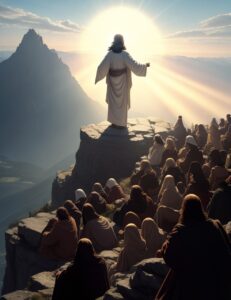
Following the statements of Matthew 5:1-12, Jesus continues for another chapter and a half in what we commonly call the Sermon on the Mount. In the chapters of Matthew 5-7 is recorded the greatest sermon of all time, with each successive lesson elaborating on the pattern that is to be our lives. However, all of the lessons of Matthew 5:13-7:27 are summarized in the Beatitudes. As we examine ourselves against that pattern, we can then move on to the detailed instructions given in the balance of the sermon. Jesus speaks on: 1) our influence to the world; 2) Christ as fulfillment of the Law; 3) sin is not just physical, it begins as a spiritual issue; 4) the sanctity of marriage; 5) the value of integrity; 6) how to pray; 7) that which is truly valuable, and; so much more.
As we continue studying these “blessed” statements, are we carefully coloring in our lives with Jesus’s words as the lines to stay within? As children with a coloring book, we often stray outside those lines. The question we must answer is: do we go back to the pictures we have already colored and purpose in our hearts to stay closer to the inside lines next time?