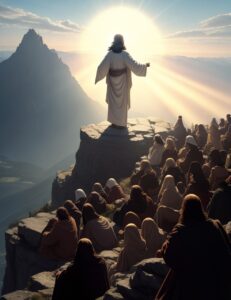
 While I understand the motivation behind the statement, it is shortsighted to view the Beatitudes merely as attitudes. It seems equally problematic when someone considers the text of Matthew 5:1-12 as a discussion of separate people. We can also find people who view the text as a reference to something yet to come. But the fact of the matter is that Jesus is describing something much more in the beginning of the Sermon on the Mount.
When Jesus lists those who are blessed, He is actually listing the characteristics (the defining traits) that separate children of God from the rest of the world. Jesus is describing what is required of us if we are truly going to submit to the will of God. We can also see this as a progression of sorts with the verses forming 1) the beginning of faith, 2) the growth of faith, 3) the maturing of faith and finally 4) the trials of faith. When we read and study what has become known as the Beatitudes, we are seeing the purest explanation of what it takes to be an obedient Christian. Christ’s words go further and pronounce the specific, albeit spiritual, rewards of an obedient life.
The Beatitudes outline several traits on which we should base our lives, and then tell us of the rewards: heaven, comfort, fulfillment, mercy, and an eternal relationship with God. The listing of these traits and rewards also shows that, with God, rewards are spiritual. That doesn’t mean that physical life holds no pleasure for the faithful, but it should instill in us an understanding that our heavenly home is the ultimate promise. To live in glorious perfection, without pain or sadness, in the presence of the Almighty, is a goal worth whatever costs we encounter.
Ironically, while those who heard Jesus teach immediately recognized that He taught “…as one having authority…” (Matthew 7:29), that is not the world’s reaction today. In the Beatitudes, Jesus explained the law we now focus on. Through the study of this great sermon and other New Testament scriptures, we find divine guidance for a life pleasing to God. And yet, man tries either to ignore God’s word or to add to it. As we consider the text, let us each put aside our opinions, rely solely on the Bible for guidance and work to integrate these attitudes not as occasional feelings, but as pervasive, all-controlling traits of our faithful lives.